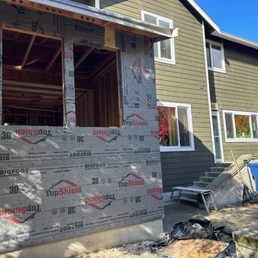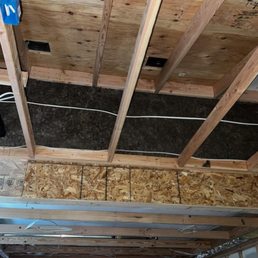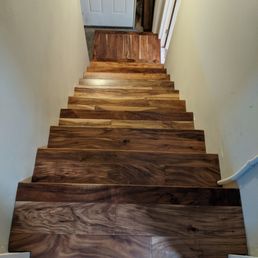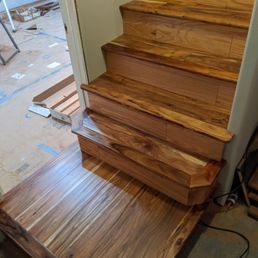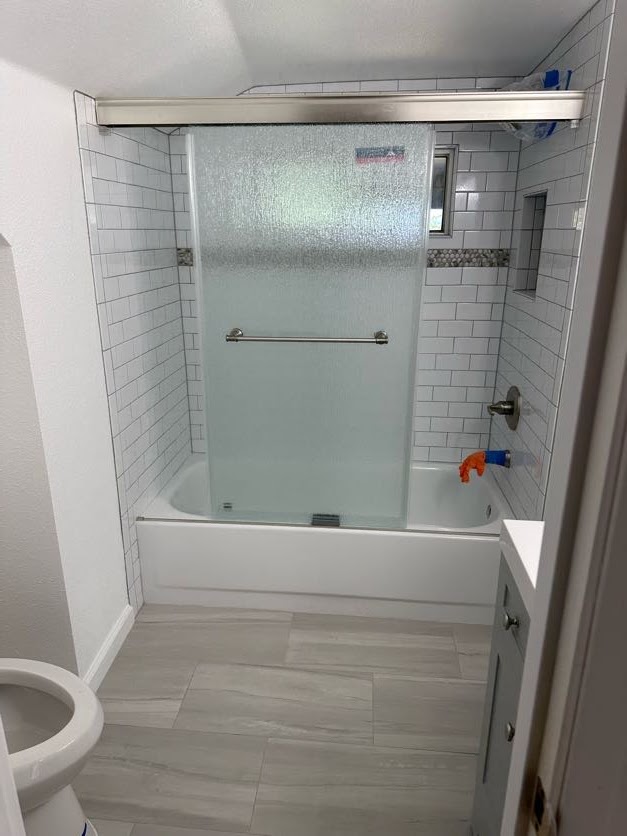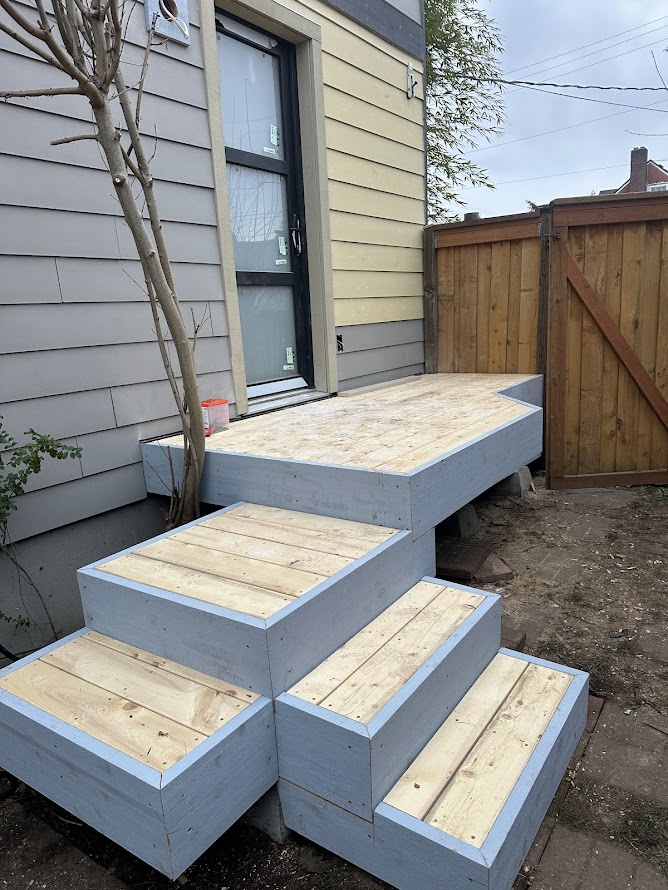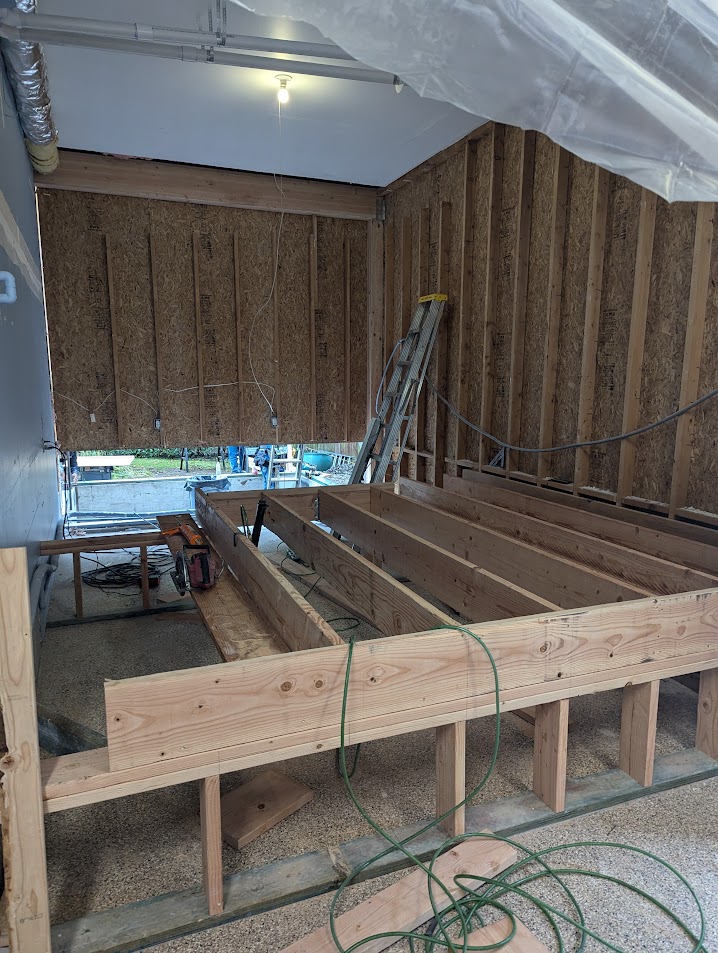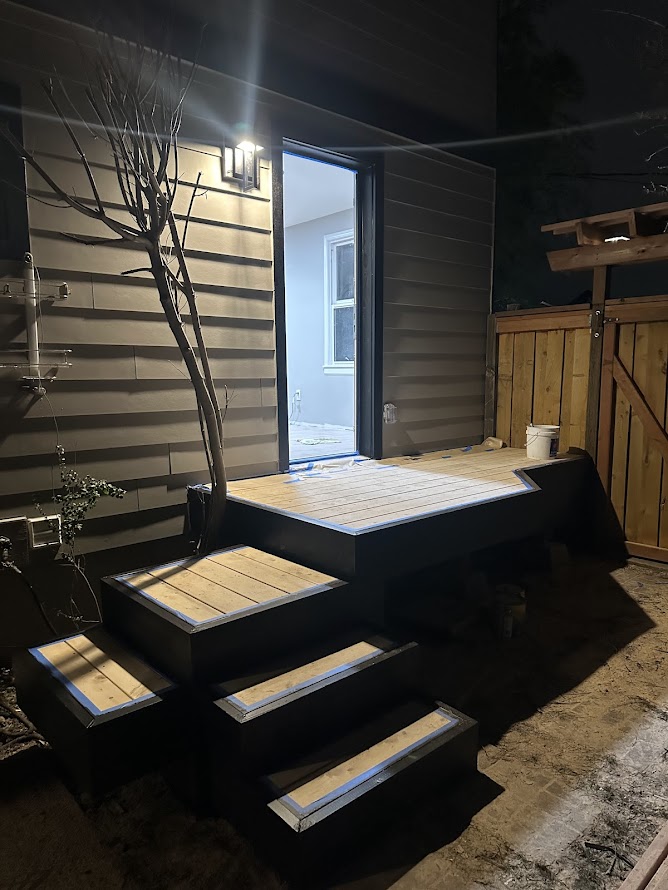
You stood in the driveway of your Graham home, looked at the cracked foundation, the failing roof, the original 1970s electrical panel, and asked the question every Pierce County homeowner eventually asks: is this worth saving, or am I better off knocking it down and starting fresh?
The answer is rarely emotional. It is mathematical. And in Graham WA specifically, the math has shifted dramatically over the last few years.
Tearing down a house in Pierce County costs $6,000 to $25,000 for a typical 2,000 square foot home, with most jobs landing between $15,000 and $21,000 according to local excavation contractors. Building new on the same lot runs $250 to $550 per square foot, putting a 2,000 square foot replacement at $500,000 to $1,100,000. Compare that to a whole-home renovation at $20,000 to $100,000 (or $35,930 to $93,470 in actual Graham project data), and the decision starts to look obvious.
Until you factor in the things that flip the math the other way: foundation problems, asbestos, knob-and-tube wiring, code-triggered upgrades, sewer line failures, and the simple reality that some Graham homes were not built to last another 30 years no matter how much money you throw at them.
This guide breaks down exactly when a Graham WA home is worth renovating, when it is not, and how to make the decision with hard numbers instead of hope.
The Core Question: Is Your Home a Renovation Candidate or a Tear-Down?
Before any cost analysis, your home falls into one of three categories.
Category 1: Solid renovation candidate. Foundation is sound. Framing is structurally intact. Layout works for your needs with moderate modifications. Major systems (roof, HVAC, electrical, plumbing) need updating but the bones of the house support modernization. Most Graham homes built after 1990 fall here, along with well-maintained earlier homes.
Category 2: Borderline case. Foundation is mostly fine but shows settling or cracks. Layout is awkward but workable. Multiple major systems need replacement simultaneously. Code compliance triggers significant upgrades. Renovation is possible but hits 50% to 75% of replacement cost. This is where most pre-1980 Graham homes land, especially in the older sections near Meridian Avenue East and Kapowsin.
Category 3: Tear-down candidate. Foundation problems require partial or full replacement. Severe structural damage from rot, water, or pests. Layout is fundamentally incompatible with modern living and cannot be fixed without gutting. Renovation costs exceed 60% to 75% of new construction value. Pre-1960 Graham homes that have not been substantially updated often end up here.
The rest of this guide gives you the criteria and numbers to figure out which category fits your specific home.
The 50% Rule (and Why It Doesn’t Always Work in Graham)
The traditional rule says: if renovation costs reach 50% of replacement value, tear down and rebuild instead. Multiple major construction sources support this benchmark.
Here is how the math works for a typical Graham home.
Scenario 1: Renovation makes sense.
- 1,800 sq ft home built in 1995
- Current value: $475,000
- Cost to rebuild new: 1,800 × $300 = $540,000
- Renovation budget: $80,000 (kitchen, bathrooms, flooring, exterior paint, HVAC update)
- Renovation cost as % of replacement: 14.8%
- Decision: Clear renovation candidate.
Scenario 2: Borderline case.
- 2,000 sq ft home built in 1972
- Current value: $425,000
- Cost to rebuild new: 2,000 × $325 = $650,000
- Renovation budget: $215,000 (full kitchen and bath, knob-and-tube replacement, panel upgrade, asbestos abatement, roof, windows, HVAC, foundation crack repair)
- Renovation cost as % of replacement: 33%
- Decision: Renovation still makes sense, but barely. Hidden cost discoveries could push you over the line.
Scenario 3: Tear-down territory.
- 1,400 sq ft home built in 1958
- Current value: $385,000
- Cost to rebuild new: 1,400 × $325 = $455,000
- Renovation budget needed: $310,000 (foundation reinforcement, full asbestos abatement, complete rewire, repipe, gut renovation, addition to fix layout)
- Renovation cost as % of replacement: 68%
- Decision: Tear down. You are spending 68% of new construction cost to end up with an old house.
The 50% rule is a starting point, not a final answer. In Graham specifically, three local factors push the decision threshold lower than the standard rule suggests.
Pacific Northwest moisture damage compounds. A 1965 Graham home that looks fine on inspection often hides 15 to 25 years of accumulated wet rot, dry rot, and moisture damage in places no one has opened up yet. Renovation budgets routinely overrun by 25% to 40% on older PNW homes specifically because of this.
Pierce County code triggers cascade. Once you pull permits in an older home, inspectors require code compliance on systems that were not part of your original scope. A simple kitchen remodel turns into knob-and-tube replacement ($12,000 to $36,600), panel upgrade ($1,500 to $4,000), and egress window installation ($2,500 to $5,000) before the cabinets even arrive.
Land value relative to home value matters more than ever. Graham land values have appreciated significantly. In some areas, a $475,000 property may have $200,000 to $300,000 of that value in the land itself. When the home represents only 35% to 50% of total property value, tear-down math changes dramatically.
Real Cost Comparison: Renovate vs. Tear Down in Graham WA
Here is what the actual numbers look like for a typical 2,000 square foot Graham home, comparing comprehensive renovation against tear-down and rebuild.
Comprehensive Renovation (Older Pre-1980 Home)
| Item | Cost Range |
| Asbestos and lead testing/abatement | $3,000 to $8,000 |
| Whole-home rewire (knob-and-tube replacement) | $12,000 to $36,600 |
| Electrical panel upgrade | $1,500 to $4,000 |
| Whole-home repipe | $4,500 to $15,000 |
| Roof replacement | $12,000 to $25,000 |
| Window replacement | $12,000 to $25,000 |
| HVAC replacement | $7,500 to $15,000 |
| Kitchen remodel | $25,000 to $75,000 |
| Bathroom remodel (2 baths) | $20,000 to $50,000 |
| Flooring throughout | $8,000 to $20,000 |
| Exterior paint | $6,000 to $12,000 |
| Foundation repairs | $2,000 to $15,000 |
| Permits and inspections | $2,000 to $7,500 |
| Hidden cost contingency (20%) | $25,000 to $60,000 |
| Total realistic range | $140,500 to $368,100 |
The wide range reflects what hides behind the walls. Most comprehensive Graham renovations on older homes land in the $200,000 to $300,000 range when all surprises surface.
Tear Down and Rebuild (Same Lot)
| Item | Cost Range |
| Demolition (Pierce County, 2,000 sq ft) | $6,000 to $14,000 |
| Asbestos testing and abatement before demolition | $3,000 to $8,000 |
| Demolition permits | $200 to $450 |
| Utility disconnection and capping | $500 to $2,000 |
| Foundation removal (if needed) | $2,000 to $6,000 |
| New construction (2,000 sq ft × $250 to $400) | $500,000 to $800,000 |
| New foundation (if old removed) | $12,000 to $28,000 |
| Building permits and impact fees | $5,000 to $15,000 |
| Site prep and grading | $5,000 to $25,000 |
| Connecting utilities | $5,000 to $20,000 |
| Architect and engineering fees | $15,000 to $40,000 |
| Landscape restoration | $5,000 to $20,000 |
| Hidden cost contingency (10%) | $55,000 to $90,000 |
| Total realistic range | $613,700 to $1,068,450 |
For a typical Graham home, tear-down and rebuild typically runs $650,000 to $850,000 all-in for a builder-grade home, or $850,000 to $1,200,000 for a custom home with quality finishes.
When the Math Tips Toward Tear-Down
The decision tips toward tear-down when:
- Renovation projected costs reach $300,000 to $400,000 on a home valued at $450,000 to $550,000
- Foundation work alone is projected at $25,000 or more
- Multiple major systems plus hazardous material remediation stack simultaneously
- The home’s footprint or layout fundamentally cannot accommodate your needs
- You plan to stay in the home 15+ years (longer payback period)
The math favors renovation when:
- Foundation is structurally sound
- Major systems can be replaced sequentially over time
- The current footprint and layout work with moderate modifications
- The home retains architectural features worth preserving
- Total renovation cost stays under 50% of replacement cost
Eight Signs Your Graham WA Home Is Better Off Torn Down
Some homes give clear signals. If three or more of these apply, get serious quotes for both options before committing to renovation.
1. Foundation Failure That Cannot Be Reasonably Repaired
Minor foundation cracks are normal and repairable for $2,000 to $10,000. Major foundation problems (significant settling, structural compromise, water intrusion damaging the slab) often run $25,000 to $80,000+ to fix properly. When foundation work alone exceeds 15% of new construction cost, you are repairing what would be discarded in a tear-down anyway.
In Graham specifically, homes built on poorly compacted fill, with inadequate drainage, or in areas with high water tables face higher foundation failure rates.
2. Severe Wet Rot or Dry Rot in Structural Framing
Localized rot is normal in Pacific Northwest homes and repairs typically run $2,000 to $8,000 per affected zone. Widespread structural rot is different. When floor joists, rim joists, wall plates, and load-bearing studs all show fungal damage, you are essentially replacing the structure of the home one piece at a time. The repair cost approaches new construction cost without the benefits of new construction.
Graham’s 40+ inches of annual rainfall combined with deferred maintenance creates this scenario more often than homeowners expect, especially in homes with original cedar siding or untreated wood foundations.
3. Layout That Fundamentally Doesn’t Work
Some homes are physically incompatible with modern living. Ceiling heights below 7’6″ are nearly impossible to raise without rebuilding the entire structure. Tight stair runs, awkward galley kitchens, master bedrooms accessed through other bedrooms, and original 1950s split-level layouts often cannot be fixed without gutting the entire home.
When the architect tells you the only way to get an open kitchen-living concept requires removing 60% of interior walls, you are essentially demolishing the home from the inside while keeping the shell. Tear-down often wins this calculation.
4. Multiple Major Systems Simultaneously At End-of-Life
The 17-year problem multiplied by 30 years equals tear-down territory. When the roof needs replacement, the HVAC needs replacement, the water heater needs replacement, the electrical panel needs upgrade, and the plumbing needs full repipe, you are spending $80,000 to $150,000 just to update systems on a home with original windows, original kitchens, and original bathrooms.
That money buys 30% to 40% of a new home build instead of buying you new mechanicals in an old shell.
5. Pre-1978 Construction with Extensive Asbestos and Lead
Graham homes built before 1978 likely contain lead paint somewhere. Pre-1980 homes often contain asbestos in flooring, insulation, ceiling tiles, pipe wrap, or siding. Targeted abatement during renovation runs $3,000 to $10,000. Whole-home abatement to safely remove all hazardous materials before a major renovation can hit $20,000 to $50,000.
When abatement plus structural updates approaches 30% of total renovation budget, the math shifts toward tear-down where these materials get demolished and disposed of as part of the demo cost.
6. Land Value Significantly Exceeds Home Value
When your $475,000 Graham property breaks down into $300,000 land and $175,000 home, the home’s contribution to total value is small. Tearing it down to build a $700,000 to $900,000 modern home creates a $1,000,000+ property in a market that supports those values.
The classic rule: when the home value is less than 30% of total property value, tear-down typically wins financially.
7. Renovation Cost Approaches 60% of New Construction Cost
The standard 50% rule has stretched to 60% in some markets due to construction cost inflation. But once you cross that line on a Graham home, the math becomes brutal. You are paying nearly the cost of a new home while keeping outdated systems behind beautiful new finishes. Buyers can sense this in resale, and appraisers reflect it in valuations.
8. Insurance Costs and Code Compliance Stack High
Older Graham homes cost approximately 30% more to insure than newer construction, with 1980-era homes averaging $1,486 annually versus $1,146 for 2020 construction. Add to that the code compliance triggers, the lower energy efficiency, and the ongoing maintenance burden, and the tear-down case strengthens considerably for homes 50+ years old.
Five Reasons to Renovate Instead of Tear Down
The case for renovation is just as real, and for many Graham homes it is the clear winner.
1. Architectural Character That Cannot Be Replicated
Some Graham homes have features that modern construction simply does not produce: real plaster walls, custom millwork, solid wood doors, mature landscaping, and craftsman details. If your home has authentic architectural character, renovation preserves what new construction cannot deliver at any price point. This is especially true for well-built mid-century homes near Kapowsin and Orting Highway.
2. Substantial Cost Savings on Sound Structures
When the foundation, framing, and exterior shell are solid, renovation costs 25% to 50% of new construction for a comparable result. A $200,000 renovation on a structurally sound 1995 Graham home produces nearly the same livability outcome as a $650,000 new build. The 1995 home keeps mature landscaping, established yard, and existing utility connections.
3. Faster Timeline
Major renovations in Graham typically complete in 4 to 9 months. Tear-down and rebuild typically takes 12 to 24 months once you factor in demolition, design, permitting, and construction. If you need to live in the home (or move back in soon), renovation wins on timeline alone.
4. Established Site Conditions
Existing homes have already navigated site challenges: utility hookups, septic systems, well water (where applicable), driveway and grading, mature trees, established landscaping, and zoning compliance. Tearing down often forces you to redo all of this, adding $20,000 to $75,000 in site costs that renovation avoids.
5. Environmental and Sustainability Considerations
Construction industry research shows the most sustainable building is the one already standing. Tearing down generates 80 to 100+ tons of construction waste for a typical Graham home. Renovation preserves embodied energy, reduces landfill impact, and avoids the carbon footprint of new construction materials. For homeowners who value sustainability, this matters.
Pierce County Specific Considerations
Graham WA falls under Pierce County’s planning, permitting, and building code authority. Several local factors directly affect your renovate-vs-tear-down decision.
Pierce County demolition permit costs run approximately $156.50 to $200+ flat fee for residential demolitions. Asbestos testing and abatement notification adds $200 to $400+ before demo. Compared to King County and Seattle (where demolition permits and impact fees can stack into thousands), Pierce County’s lower fees make tear-down more financially viable.
Pierce County rebuild permits and impact fees for new construction typically run $5,000 to $15,000 including building permit, plumbing permit, mechanical permit, school impact fees, traffic impact fees, and fire prevention fees. The county increased fees effective February 1, 2026, but rates remain among the lowest in the Puget Sound region.
Critical area designations can derail tear-down plans before they start. Some Graham parcels include wetlands, steep slopes, fish and wildlife habitat areas, or other critical area indicators that require Pierce County’s Level 1 Pre-Application Screening. These designations sometimes restrict where you can build a replacement structure, occasionally making renovation the only viable option even when tear-down math looks favorable.
Septic and well systems apply to many Graham properties outside city utility boundaries. Tear-down typically requires septic inspection, possible system replacement ($12,000 to $30,000), and well capacity verification. Renovation usually keeps existing systems in place if functional.
Pierce County’s Built Green rebate program offers up to 25% permit fee refund for new construction achieving Tacoma-Pierce County Built Green 4 or 5 star certification, or LEED for Homes Gold or Platinum. Worth pursuing on tear-down rebuilds where the construction quality justifies it.
Property tax implications matter on tear-down. The new home will likely reassess at significantly higher value, increasing annual property taxes. A $1,000,000 replacement home in Graham typically generates $7,500 to $11,000 in annual property taxes versus $3,500 to $5,500 on a $475,000 existing home.
How to Make the Decision: A Practical Framework
If you are stuck between renovation and tear-down, work through these steps in order before committing to either path.
Step 1: Get a Structural Engineer Inspection ($400 to $700)
This is the single most important pre-decision investment. A structural engineer will tell you definitively whether the foundation, framing, and load-bearing structure can support major renovation. Their report becomes the foundation (no pun intended) for every subsequent decision.
Step 2: Get Three Renovation Estimates from Licensed Graham Contractors
Pull three separate bids on a comprehensive renovation that addresses everything that needs addressing. Not just the cosmetic work you want, but everything: roof, HVAC, electrical, plumbing, windows, foundation, hazardous materials, and all code compliance triggers. Add 20% contingency to whatever the highest bid shows.
Step 3: Get Two New Construction Estimates from Pierce County Builders
Get realistic estimates for tearing down your home and building a replacement that matches your needs. Include demolition, permits, site prep, utilities, design, and construction. Add 10% contingency.
Step 4: Run the 50% Rule Plus Local Factors
Calculate renovation cost as a percentage of new construction cost. Apply these adjustments:
- Pre-1980 home: subtract 5 to 10 percentage points from your renovation tolerance threshold
- Foundation issues: subtract 10 percentage points
- Layout fundamentally doesn’t work: subtract 15 percentage points
- Plan to stay 15+ years: add 5 percentage points
- Strong architectural character to preserve: add 10 percentage points
If renovation cost stays below your adjusted threshold, renovation likely wins. If it exceeds, tear-down likely wins.
Step 5: Factor in Your Timeline and Living Situation
Can you live in the home during renovation? Do you have a place to stay during 12 to 18 months of new construction? Can you afford temporary housing costs of $1,500 to $3,000+ per month? These practical realities sometimes override the financial math.
Step 6: Verify Zoning and Critical Area Status
Before committing to tear-down, verify with Pierce County that you can rebuild what you want on the lot. Critical area designations, setback changes, lot coverage limits, and zoning updates can prevent the rebuild you envision. Pierce County’s PALS Online site and Development Center (253-798-3739) can confirm what is permitted.
Conclusion
The renovate-vs-tear-down decision for Graham WA homes is not a coin flip. It is a math problem with clear answers once you have the right inputs: structural condition, total renovation scope, replacement cost, land value, and your timeline.
For most well-maintained Graham homes built after 1985, renovation wins decisively. The bones are good, major systems can be updated sequentially, and renovation costs typically stay under 35% of replacement cost.
For pre-1980 Graham homes with deferred maintenance, foundation issues, hazardous materials, or fundamental layout problems, tear-down increasingly wins as renovation budgets approach 50% to 60% of new construction cost. Pacific Northwest moisture compounds these problems faster than homeowners expect.
The worst decision is committing to one path without running the numbers on the other. Spending $300,000 on a renovation that ends up being 70% of replacement cost is the financial equivalent of buying a used car for the price of a new one. Tearing down a structurally sound home with strong character is the equivalent of throwing away money you could have invested in upgrades.
Get the structural engineer inspection. Pull three renovation bids and two new construction bids. Run the math. Factor in your timeline, your zoning, your land value, and your long-term plans. The right answer for your specific Graham home will become clear, and it will rarely be the answer you had in mind when you started looking at the cracks in the foundation.
A $475,000 Graham home with sound bones and updated systems is worth keeping. A $475,000 Graham home with foundation problems, asbestos, knob-and-tube wiring, and a layout from another era is often worth more as a buildable lot than as a renovation project. The numbers tell you which one you have.
Frequently Asked Questions
Is it cheaper to remodel or tear down and rebuild in Graham WA?
Renovation is almost always cheaper for sound structures, often costing 25% to 50% of new construction. Tear-down becomes cheaper than renovation only when foundation problems, severe rot, hazardous material abatement, or fundamental layout issues stack to push renovation costs above 60% of replacement cost.
How much does it cost to tear down a house in Pierce County?
Pierce County residential demolition runs $3 to $7 per square foot, putting a 2,000 square foot home at $6,000 to $14,000. Most jobs land between $15,000 and $21,000 when you include permits, asbestos testing, utility capping, and foundation removal.
How much does it cost to build new in Graham WA?
Builder-grade new construction in Pierce County runs $250 to $400 per square foot. Custom homes run $400 to $550+ per square foot. A 2,000 square foot home typically costs $500,000 to $800,000 to build, before land or site prep costs.
Should I tear down a 50-year-old home in Graham?
Not automatically. Many 1970s Graham homes have decades of useful life left if the foundation is sound, structural framing is intact, and hazardous materials are limited. The decision depends on specific condition, not just age. Get the structural engineer inspection first.
What is the 50% rule for tear-down decisions?
If renovation costs reach 50% of replacement cost, tear-down and rebuild typically makes more financial sense. In Graham specifically, this threshold drops to 40% to 50% on pre-1980 homes due to compounding moisture, code, and hazardous material costs.
Can I rebuild on the same foundation if I tear down?
Sometimes. If the existing foundation passes structural engineering inspection and matches the footprint of your new build, you can save $12,000 to $28,000 on foundation work. Most structural engineers are reluctant to certify older foundations for new construction without significant reinforcement.
How long does each option take?
Comprehensive Graham renovations typically take 4 to 9 months. Tear-down and rebuild typically takes 12 to 24 months from demolition through move-in, including design, permitting, and construction phases.
Will my property taxes change if I tear down and rebuild?
Yes, significantly. Pierce County reassesses property values after major construction. A new home replacing an older home typically increases assessed value 60% to 200%+, with corresponding property tax increases. Budget for $7,500 to $12,000+ annually in property taxes on new construction Graham homes.
Is renovation better for resale value?
Depends on the market and your competition. In neighborhoods with mostly newer homes, a renovated older home often underperforms compared to new construction. In neighborhoods with strong character and mature landscaping, well-renovated older homes can match or exceed new construction values.